

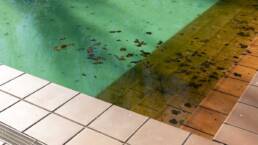
Few things are more frustrating than looking out at a pool that should be sparkling and instead seeing hazy, dull, or milky water. Cloudy water is one of the most common issues Denver pool owners run into, and it can show up even when you feel like you are keeping up with regular cleaning. The good news is that cloudy water almost always points to one of a handful of causes, and most of them are easy to diagnose once you know what to look for. Below, we walk through the most common reasons your pool water turns cloudy, how Colorado’s climate plays a role, what you can do to prevent it going forward, and when it is time to call in a professional rather than continuing to guess.
Common Causes of Cloudy Pool Water
Cloudy water is rarely a mystery once you break it down. In most cases, it comes down to chemistry, filtration, or a combination of both working against each other at the same time. Understanding which category your pool falls into is the fastest way to get from hazy water back to a clear, swim ready pool.
Chemical Imbalance
Chlorine, pH, and alkalinity all work together to keep water clear. When any one of them drifts out of range, the others struggle to compensate, and the water often turns hazy as a result. Low chlorine is the most common culprit, since it allows small particles and organic material to build up faster than they can be filtered out. High pH can also cause cloudiness by preventing chlorine from working as effectively, even if your chlorine level looks fine on paper. Rapid swings in either direction, such as adding a large dose of shock after heavy rain or a busy pool party, can also cloud the water temporarily while everything works its way back into balance.
Poor Filtration
Your filter is constantly pulling small debris and particles out of the water, and if it is not running long enough, or if it needs cleaning, those particles simply stay suspended instead of getting trapped. A filter that has not been backwashed or cleaned in a while loses much of its effectiveness, even if the pump itself is running fine. Sand filters that have not been changed in several seasons and cartridge filters that are overdue for a rinse are two of the most common filtration culprits we see on service calls.
- Chlorine or sanitizer levels below the recommended range
- pH or alkalinity that has drifted outside the ideal range
- Filter cycles that are too short for the size of the pool
- A filter that has not been cleaned or backwashed recently
How Colorado’s Climate and Altitude Can Play a Role
Denver’s climate adds a few local wrinkles to water clarity that homeowners in other parts of the country do not always deal with. Understanding these factors can help you figure out why your pool seems to cloud up faster than a friend’s pool in a different climate.
Sun Exposure and Evaporation
Colorado’s high altitude means more direct sun exposure throughout the day, which breaks down chlorine faster than it would at lower elevations. Combined with our generally dry air, pools also lose water to evaporation more quickly, which concentrates minerals and throws off chemical balance if levels are not adjusted to compensate. Homeowners who only test their water on a normal schedule may find that a long stretch of sunny days has quietly pushed things out of range without any obvious warning sign.
Hard Water and Mineral Buildup
Much of the Denver Metro area has fairly hard water, meaning it carries more dissolved calcium and other minerals. Over time, this can contribute to a cloudy or slightly dull appearance, especially if calcium levels climb without regular monitoring. This is one of several reasons why a saltwater versus chlorine setup can behave a little differently in Denver than it might elsewhere, since mineral content interacts with each system in its own way. Homeowners who notice a gritty texture on pool walls or a chalky film along the waterline are often seeing early signs of calcium buildup rather than a typical chemistry problem.
Equipment Issues That Lead to Cloudy Water
Sometimes the water chemistry looks fine on your test strips, but the pool still will not clear up. When that happens, the issue is often mechanical rather than chemical, and no amount of additional shock or algaecide will solve a problem that is really coming from your equipment.
- Undersized or clogged filters: A filter that is too small for your pool, or one that is packed with debris, cannot keep up with normal bather load and airborne dust.
- Weak circulation: Dead spots in your pool where water does not circulate well allow particles to settle and linger instead of reaching the filter.
- Aging pumps: A pump that has lost efficiency over the years may not be moving enough water through the system, even if it still sounds like it is running normally.
If you have ruled out chemistry and the water is still cloudy, it is worth having your pool equipment inspected for repair or replacement before assuming the problem will resolve on its own. Equipment issues tend to show up gradually, which makes them easy to overlook until the water quality finally makes the problem obvious. A quick inspection can often catch a struggling pump or an undersized filter well before it becomes a bigger and more expensive repair.
Preventing Cloudy Water Before It Starts
 Once your water is clear again, a few consistent habits can help you avoid going through the same troubleshooting process every few weeks. Most prevention comes down to staying ahead of chemistry and keeping your equipment running the way it should, rather than waiting until the pool already looks hazy. Building a simple routine around testing and filtration takes very little extra time each week, but it makes a noticeable difference in how consistently clear your water stays throughout the season.
Test More Often During Peak Season
Hot, sunny stretches and heavy pool use both accelerate chlorine loss, so testing two to three times a week during the busiest part of summer catches small shifts before they turn into visible cloudiness. A simple log of your readings over a few weeks can also help you spot patterns, such as chemistry that always dips after a weekend of heavy use.
Keep Filtration on a Consistent Schedule
Running your filter for the recommended number of hours each day, rather than shortening the cycle to save on energy costs, keeps particles moving out of the water instead of settling. Cleaning or backwashing on a regular schedule, rather than waiting until performance noticeably drops, keeps your filter working at full capacity throughout the season.
- Test chemistry two to three times per week during peak summer use
- Run your filter for its full recommended cycle each day
- Clean or backwash filters on a set schedule rather than waiting for problems
- Brush pool walls and floors weekly to prevent particles from settling
When Cloudy Water Signals a Bigger Problem
Most cloudy water clears up within a day or two of adjusting chemistry and running the filter longer. If it does not, that is usually a sign something more specific is going on, and it may be time to bring in a professional rather than continuing to guess.
A few situations where professional help makes sense include water that stays cloudy for more than 48 to 72 hours despite balanced chemistry, water that clouds up again within a day of clearing, or cloudiness that shows up alongside a strong chemical smell or eye irritation. These patterns often point to a filtration issue, a total dissolved solids problem, or a sanitizer that is not being produced or distributed correctly. Total dissolved solids in particular can be tricky to diagnose on your own, since standard test strips do not always measure them, yet high levels can make water look permanently dull no matter how much you shock or filter it.
Our pool cleaning and maintenance service includes water testing that goes beyond a basic test strip, which helps pinpoint exactly what is driving persistent cloudiness rather than treating it by trial and error. In many cases, a professional visit can resolve in a single appointment what might otherwise take weeks of guesswork and wasted chemicals to work through on your own.
Quick Checklist: How to Clear Up Cloudy Pool Water
If your pool is cloudy right now, here is a simple order of operations to work through before assuming the worst:
- Test and correct chlorine, pH, and alkalinity levels
- Run the filter for a longer cycle, or continuously for a day or two
- Backwash or clean the filter if it has not been done recently
- Brush and vacuum the pool to help trapped particles reach the filter
- Check that the pump and filter are sized appropriately for your pool
- Call a professional if cloudiness persists after 48 to 72 hours
Homeowners throughout the Denver Metro area we serve deal with some version of cloudy water at some point, especially given our altitude, sun exposure, and mineral content. Working through this checklist in order usually narrows down the cause quickly, since chemistry and filtration are the source of the vast majority of cloudy water cases we see. Starting with the simplest explanations first also saves you from spending money on equipment repairs when the real issue might just be a chemical imbalance that a day or two of proper testing can resolve.
Get Help Clearing Up Your Pool
Cloudy water is annoying, but it is almost always fixable once you know where to look. Whether the issue comes down to chemistry, filtration, or aging equipment, our team can help you get your water back to swim ready condition and keep it that way going forward. We test, balance, and inspect equipment as part of our regular service, so problems like this get caught early instead of turning into a summer long headache. Our team has spent years working with pools throughout the Denver Metro area, so we know how our local climate and water tend to affect clarity, and we can usually narrow down the cause faster than a generic troubleshooting checklist. Get a Free Estimate from our team today and let us help you figure out exactly why your water is cloudy and how to keep it clear.

Ready for an expert opinion? Get in touch today!
Laguna Pools is a professional pool and spa contractor that has been servicing the Denver area for over 20 years. We offer routine cleaning and maintenance services, new pool design, construction, and remodeling.
Like this article? Spread the word!
Related Posts
Spring Storms Are Coming: How to Protect Your Pool
Worried about spring storm damage to your pool? Discover smart prep tips, drainage…

How to Open Your Pool for Summer in Colorado: A Step-by-Step Checklist
Learn how to open your pool for summer the right way in Colorado. Laguna Pools shares a…

8 Pool Safety Tips Every Denver Homeowner Should Know
Keep your family safe around the pool with 8 practical tips from Laguna Pools. Get a Free…