


Choosing the right type of pool is one of the biggest decisions you will make in the entire construction process, and it affects everything from upfront cost to long-term maintenance to how the pool will hold up against Colorado’s climate. Gunite, fiberglass, and vinyl liner pools each have distinct advantages, and the right choice depends on your budget, your timeline, and what matters most to you in a backyard pool.
At Laguna Pools, we help Denver Metro homeowners weigh these options every day. Here is a closer look at how the three main pool types compare.
There is no single “best” pool type that works for every homeowner. Each option involves a different balance of upfront cost, construction timeline, design flexibility, and long-term maintenance, and the right answer depends on which of those factors matters most to you.
Gunite Pools: Built for Customization and Durability
Gunite pools are constructed by spraying a mixture of concrete and sand over a steel-reinforced frame, then finishing the surface with plaster, aggregate, or tile. Because the shell is built on site rather than manufactured off site, gunite pools offer the most flexibility in terms of shape, size, and custom features.
Advantages of Gunite Pools
- Nearly unlimited design flexibility, including custom shapes, depths, and built-in features
- Extremely durable shell that can last for decades with proper care
- Surface finish can be resurfaced or updated over time without replacing the entire pool
Considerations to Keep in Mind
- Longer construction timeline compared to fiberglass or vinyl liner options
- Higher upfront cost due to the custom, labor-intensive construction process
- Plaster surfaces require periodic resurfacing over the life of the pool
If you are drawn to a highly customized pool with unique features like a tanning ledge, an attached spa, or a specific shape that fits an irregular backyard, gunite is generally the most flexible option. Our pool construction and renovation team can walk you through design possibilities specific to your property.
Because a gunite shell is built entirely on site, it can also be adapted to work with unusual lot shapes, sloped yards, or specific landscaping features that a manufactured shell simply cannot accommodate. This makes gunite a popular choice for homeowners with a clear vision for a one-of-a-kind backyard space.
Fiberglass Pools: Speed and Consistency
Fiberglass pools are manufactured off site as a single, pre-formed shell, then transported and installed into an excavated space in your backyard. Because the shell arrives essentially complete, installation timelines are typically much shorter than gunite construction.
Advantages of Fiberglass Pools
- Faster installation timeline since the shell is manufactured ahead of time
- Smooth, non-porous surface that tends to resist algae growth
- Generally lower long-term maintenance needs compared to gunite
Considerations to Keep in Mind
- Shape and size options are limited to what manufacturers offer, reducing customization
- Transporting and placing a large, single-piece shell requires careful site access planning
- Repairs to the gel coat surface, if damaged, can be more specialized than repairing plaster
Fiberglass tends to appeal to homeowners who want a quicker path from decision to swimming and who are comfortable choosing from a range of pre-designed shapes rather than a fully custom layout.
Because the manufacturing happens off site, weather delays during construction tend to have less impact on a fiberglass project compared to gunite, where curing and finishing steps depend more heavily on consistent conditions. This can make fiberglass an appealing choice for homeowners working within a tighter seasonal timeline.
Vinyl Liner Pools: Budget-Friendly Flexibility
Vinyl liner pools use a structural wall system, often made of steel, polymer, or a combination of materials, lined with a custom-fitted vinyl sheet that holds the water. This approach tends to offer a middle ground between the customization of gunite and the speed of fiberglass.
Advantages of Vinyl Liner Pools
- Generally the most budget-friendly option for upfront construction costs
- More shape flexibility than fiberglass, since the wall structure can be configured in various layouts
- Smooth vinyl surface is comfortable for swimmers and resists algae well while intact
Considerations to Keep in Mind
- Vinyl liners typically need replacement every several years, adding a recurring cost over time
- Liners can be punctured or torn, which requires prompt repair to avoid water loss
- Long-term costs can add up once liner replacements are factored into the total investment
Vinyl liner pools often make sense for homeowners who want a lower upfront investment and are comfortable planning for periodic liner replacement as part of normal pool ownership.
Modern vinyl liners have also improved significantly in durability and appearance compared to older generations, with a wider range of patterns and textures available. For homeowners focused on getting into a pool sooner without stretching the budget as far as a gunite build requires, vinyl liner construction remains a practical middle-ground option.
How Colorado’s Climate Factors Into the Decision
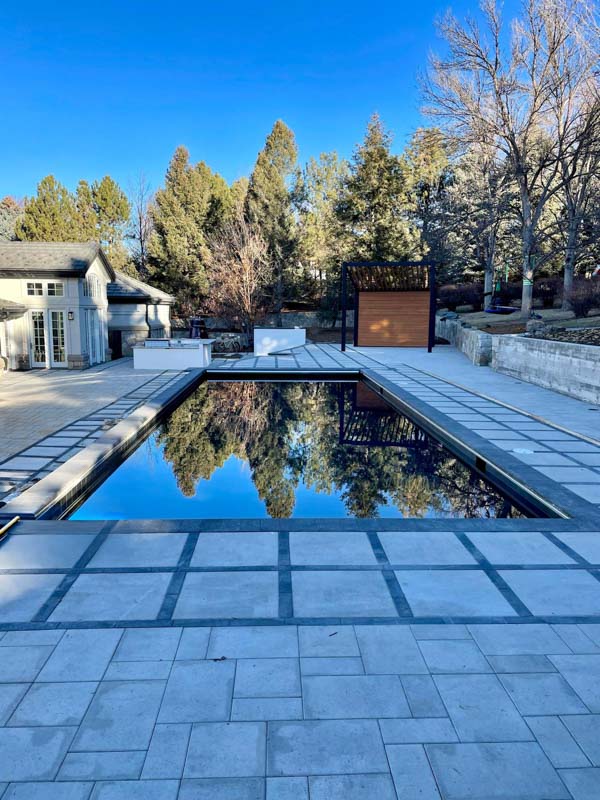 Denver’s high altitude, intense UV exposure, and dramatic freeze-thaw cycles all place extra stress on pool materials compared to milder climates. Gunite’s steel-reinforced shell tends to hold up well to ground movement from freeze-thaw cycles, though the plaster surface may need resurfacing somewhat more frequently under intense sun exposure. Fiberglass shells are generally flexible and resistant to cracking from ground movement, which can be an advantage in areas with shifting soil. Vinyl liners can become more brittle over time under strong UV exposure, which is worth factoring into how often you expect to replace the liner.
None of these factors make one pool type unsuitable for Colorado, but they are worth discussing with your contractor so your expectations around long-term maintenance match the realities of our climate.
Soil composition across the Denver Metro area can also vary meaningfully from neighborhood to neighborhood, which affects how much ground movement a pool shell needs to withstand over time. A qualified contractor should evaluate your specific site conditions rather than applying a one-size-fits-all recommendation based on pool type alone.
Comparing Timeline and Cost at a Glance
Construction Timeline
- Fiberglass: typically the fastest, often measured in weeks
- Vinyl liner: moderate timeline, generally faster than gunite
- Gunite: longest timeline due to on-site construction and curing time
Upfront Cost
- Vinyl liner: generally the most affordable upfront option
- Fiberglass: mid-range upfront cost depending on size and shape selection
- Gunite: typically the highest upfront investment due to custom construction
It is worth remembering that upfront cost is only part of the picture. Long-term maintenance, resurfacing, or liner replacement costs should all factor into your total cost of ownership over the years you plan to keep the pool. A pool with a lower sticker price today is not necessarily the more affordable choice once a decade or two of upkeep is factored in, and homeowners are often surprised by how much this longer view can shift their thinking.
Questions Worth Asking Before You Decide
- How much design flexibility do I want in the shape and features of my pool?
- How important is a faster installation timeline to my overall renovation or build schedule?
- Am I comfortable budgeting for periodic resurfacing or liner replacement down the road?
- Does my backyard have any access constraints that could affect fiberglass shell delivery?
Working through these questions with an experienced contractor can help clarify which pool type lines up best with your priorities. If you would like to see examples of completed projects, our portfolio features a range of pools we have built for homeowners across the region.
It is also worth asking a potential contractor how long they have worked with each pool type and whether they have experience specific to Colorado’s soil and climate conditions. A contractor with deep experience across all three pool types can give you a more balanced recommendation than one who primarily builds a single type and may be inclined to steer every project in that direction.
Quick Recap: Which Pool Type Fits You?
- Choose gunite if custom design and long-term flexibility matter most to you
- Choose fiberglass if a faster timeline and low ongoing maintenance are top priorities
- Choose vinyl liner if a lower upfront cost is the primary driver of your decision
If your existing pool needs attention rather than a full replacement, our post on signs your pool needs resurfacing or renovation can help you determine whether renovation or a full rebuild makes more sense for your situation. For general questions about construction timelines and permits, our FAQ page covers several of the basics as well, including how long a typical build takes and what the permitting process usually involves in the Denver area.
Let Laguna Pools Help You Choose the Right Pool Type
Every backyard, budget, and homeowner is different, and the best pool type for your neighbor may not be the best fit for you. Our team proudly serves homeowners throughout the Greater Denver Metro area and can walk you through the pros and cons specific to your property and goals, taking into account your soil, sun exposure, and how you plan to use the pool for years to come.
Get a Free Estimate today and let us help you choose the pool that fits your backyard, your budget, and your lifestyle.
Ready for an expert opinion? Get in touch today!
Laguna Pools is a professional pool and spa contractor that has been servicing the Denver area for over 20 years. We offer routine cleaning and maintenance services, new pool design, construction, and remodeling.
Like this article? Spread the word!
Related Posts

How Much Does It Cost to Maintain a Pool in Denver?
Wondering what pool maintenance costs in Denver? Laguna Pools breaks down the factors…


5 Signs Your Pool Needs Resurfacing or Renovation
Not sure if it's time to repair or renovate your pool? Laguna Pools shares 5 signs to…